Can I submit a Review paper without my adviser?

A research paper is an academic writing that presents analysis, interpretation, and argument based on extensive independent study. A research report entails surveying a subject of knowledge to get the most relevant facts. It is a typical assignment that requires students, academics, and scientists to address particular questions using sources. Research papers are comparable to academic essays, but typically longer and more extensive assignments designed to evaluate not only the writing talents but also the scholarly research abilities. A research paper is one of several types of papers in which scholars evaluate problems or topics, seek secondary sources, and create papers on specific themes. Writing a research paper needs to exhibit a thorough understanding of the research field, consult several sources, and offer an original contribution to the argument. This step-by-step guide will walk through the whole writing process, from understanding the assignment to editing the final work.
Topics of content
- Regarding review paper authorship
- How to prepare a research paper without an advisor?
- What’s a review paper/Survey paper?
- Overview and Submission Instructions for Review Paper
- Submission instructions for Review Paper
- FAQ regarding survey article
Regarding review paper authorship
Anyone can publish the research article not only PhD researchers and doctorates, but students too can publish, and the supervisor doesn't need to be named in the research paper. A single person/student can also be the author of a research. The fact is that one must have extensive expertise in a specific topic, produce a high-quality research report, select a reputable journal from an international database, and adhere to the journal's format when submitting the manuscript; with consistent follow-up, one can easily gain acceptance. Academic paper submission and publication can significantly enhance an individual's profile.
How to prepare a research paper without an advisor?
- To begin, a student should select a research area that deeply captivates their interest, enabling them to explore every facet of it thoroughly.
- Once the choice is made, they can commence their quest for pertinent documents and data within the chosen field.
- The most effective approach to acquiring comprehensive knowledge entails diligent reading across a spectrum of sources, including books, journals, and relevant websites.
- Additionally, delving into previously published survey articles within the same domain can offer further insights and understanding.
Becoming an expert doesn't happen overnight, yet with unwavering dedication and effort, one can overcome any obstacle. Over time, as one immerses themselves in learning, they'll naturally accumulate knowledge. It's essential to maintain meticulous notes to aid recall, facilitating the synthesis of insights from over 200 research articles into a rough draft. Subsequently, adhering to the journal's guidelines, a preliminary copy can be crafted, paving the way for potential Review article submission and publication of a research review paper.
Drafting and publishing a review paper is straightforward as it primarily entails discussing existing research without introducing novel information. For paper submission preparation and review paper submission process, mastering the ability to express ideas in one's own words using Standard English, meticulous proofreading, and ensuring originality of content are essential.
Advantages of publishing a Review paper
Publishing a review paper offers the advantage of swiftly pinpointing research gaps within the existing literature, paving the way for the formulation of innovative methodologies to address these gaps. This process can be further elucidated by crafting a research article with meticulous implementation. Writing a scientific research paper necessitates a comprehensive comprehension of previous algorithms and proficiency with implementation tools. Therefore, guidance from a mentor is indispensable for navigating the intricacies of research paper writing, implementation, and publication.
What’s a review paper/Survey paper?
A review/survey paper draws on previously published publications. It does not present novel research. Review articles often review the existing work on a topic to describe the current level of knowledge on the subject. A review paper's main purpose is to present evidence supporting a specific fact in a field. As a result, a substantial portion of the article should be a summary of the facts that support or refute that reality. Additionally, mention the experimental methods utilized to create the data.
Three types of Review articles
- A narrative review summarizes published research on a given topic.
- A systematic review examines scientific literature to find answers to specific questions on a topic.
- A meta-analysis integrates findings from prior research to evaluate the effectiveness of an intervention.
Review papers contribute essential scientific material by summarizing the findings of current research. As a result, readers can gain an understanding of the previous research works on a topic without reading all of the published papers in that research field. Articulate review articles are popular. Most reputable publications publish review articles.
Overview for Review Paper
Introduction and Background
- Keep it concise.
- Capture the reader's attention while introducing the subject.
- Describe the relevance of the "big picture".
- Provide the background details that are required.
Contents of the Paper
- Experimental Evidence: Summarize significant findings from current original literature publications. Describe how those findings affect how we now understand the subject.
- Make note of the many kinds of tests that were conducted and the data that accompanied them, but do not reenact the experiment step-by-step. Identify and discuss any disputes within the field.
- Use figures and/or tables to display important data that was taken straight out of the source articles.
Conclusion
- Provide a brief synopsis of the main ideas.
- Draw attention to how important these findings are
- Talk about the unanswered questions in the field
- Make it succinct.
References
- Usually, it takes a minimum of 60-70 references.
Submission instructions for Review Paper
- Adhere to the journal's formatting guidelines.
- Additionally check the website of the journal before submitting to determine if review articles are accepted.
- Review papers, when published in a solid peer-reviewed publication, have a high impact and are heavily cited.
FAQs
Find More Useful Information
Explore related pages and valuable resources to deepen your understanding, discover expert insights, and find the information you need.

Research Coursework help
Our expert researchers offer advice to each student for choosing course work papers and for performing well in course work exam since research scholars are constantly confused about the relationship between course work and research, research course work, or phd course work.

Journal List
Guidance to select free journals from ugc care list based on the scope of the research articles, scholars can choose ugc aprooved journals from sci list and scopus list too
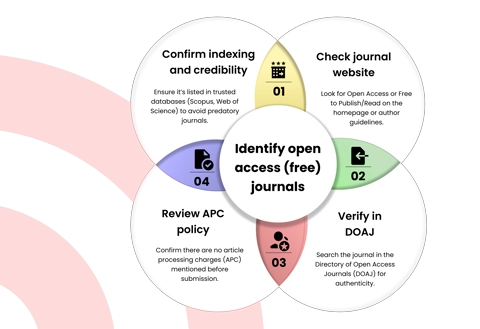
Free journal
Helping to publish the articles in free journals of sci, scopus, ieee, and international journals